A crystal grid is an intentional arrangement of crystals in a geometric pattern, activated with a clear intention and a central "anchor" stone. The geometry amplifies the energy of individual crystals. The most common grid pattern for beginners is the Flower of Life — it is easy to set up and works for any intention.
A crystal grid is an arrangement of stones placed in a geometric pattern with deliberate intention. It is, at its most basic, a form of organised attention — a way of creating a visual and spatial structure that externalises something you are working toward or thinking about.
Before discussing grids in detail, it is worth being clear about what they do and do not do. There is no empirical evidence that geometric arrangements of crystals produce measurable energetic effects independent of the practitioner. What crystal grids do accomplish is this: they create a focused, beautiful, tactile practice that organises intention and attention. The ritual of selecting stones, arranging them deliberately, and returning to the arrangement over time is the practice. The stones and the geometry are its materials.
If that framing works for you, crystal grids are a genuinely useful tool. If you approach it purely aesthetically — as a way of creating a beautiful arrangement that reflects something meaningful — that is also a valid use. This guide takes both approaches seriously.
What Makes a Crystal Grid
A crystal grid has three components:
1. A geometric pattern
The arrangement of stones follows a specific form, usually one with natural geometric associations: a circle, a spiral, a triangle, a Flower of Life pattern, or a simple linear arrangement. The geometry creates visual coherence and, in many traditions, is believed to amplify the intention by resonating with natural mathematical structures. Whether or not you hold that belief, the geometric structure creates something that feels intentional rather than random — which matters for a practice built on attention.
2. A centre stone
Most grids have a focal stone at the centre — usually a larger or more significant piece. This stone anchors the arrangement visually and, in practice, becomes the object you return your attention to when working with the grid. A large amethyst cluster, a citrine point, or a piece of obsidian all serve this function well. The centre stone should be the one that commands attention most naturally.
3. Supporting stones
Arranged around the centre stone in the chosen geometric pattern, supporting stones reinforce the intention of the grid through their own qualities — visual, geological, historical. For a grid focused on calm and clarity, amethyst throughout works naturally. For warmth and energy, citrine. For grounding and clarity of thought, obsidian. Moonstone serves well in grids oriented toward receptivity and observation.
Three Basic Grid Patterns
The Circle
The most fundamental pattern: a centre stone surrounded by a ring of supporting stones at equal intervals. Start with 4 or 8 stones in the circle. A circle grid works for any intention and creates a sense of completeness and containment. This is the best starting point for beginners — there are no complex geometry decisions to make.
The Triangle
Three supporting stones at the points of an equilateral triangle around a centre stone. Triangles suggest directionality — they point toward something. A triangle grid suits intentions around decision-making, direction, and change. If you are making a significant choice or beginning something new, a triangular arrangement creates a sense of forward movement.
The Spiral
Stones placed along a spiral path from a centre point outward (or inward). Spirals suggest process and development over time. A spiral grid suits long-term intentions — projects, habits, relationships — where you want to mark progress rather than a fixed destination. The visual effect is among the most striking of any arrangement.
Which Stones to Use Together
The question of stone combination in grids is about visual coherence as much as meaning. Some principles:
Amethyst + Clear Quartz
A classic combination that works in any grid. The cool violet of amethyst and the neutral clarity of clear quartz create visual harmony without competition. Both are quartz-family minerals, so there is geological coherence as well. This combination suits grids oriented toward clarity, calm, and sustained attention.
Amethyst + Citrine
Geological opposites that produce visual contrast: cool violet and warm amber. The combination suggests integration of opposing qualities — contemplation and action, cool and warm. Grids using this combination tend to be visually dynamic, suggesting movement and balance.
Obsidian + Amethyst
Bold contrast: the deep reflective black of obsidian and the violet of amethyst. This combination is visually dramatic and works well for grids oriented toward clarity and protection. The geological contrast — volcanic glass and crystalline quartz — adds an interesting material dimension.
Moonstone + Amethyst
Soft, cool-palette combination. The optical quality of moonstone and the solid violet of amethyst create a grid that feels both dynamic and grounded. Suits intentions around receptivity, intuition, and rest.
Single-Stone Grids
There is nothing wrong with a grid that uses only one type of stone — an arrangement of amethyst points around a central amethyst cluster, for example. Single-stone grids create strong visual unity and are easier to assemble with pieces from the same purchase. For a first grid, starting with one stone you know well is more useful than assembling a variety you are less familiar with.
How to Set Up a Grid: Step by Step
To set up a crystal grid: (1) Choose an intention. (2) Select a central stone that matches your intention. (3) Place supporting stones in a geometric pattern around it. (4) Activate by drawing an invisible line connecting each stone with a clear quartz point or your finger, while stating your intention aloud. Leave in place for a minimum of 24 hours.
Step 1: Choose your intention
Before touching any stones, decide what the grid is for. This does not need to be elaborate. A single sentence is enough: 'I am building this grid to support my focus during a demanding project' or 'this arrangement is for rest and quieting my mind.' The intention creates the context for all subsequent decisions.
Step 2: Choose your space
Find a surface where the grid can remain undisturbed for as long as you want to work with it — a shelf, a windowsill, a corner of a desk. Grids that get knocked over or rearranged accidentally lose their coherence. If you are limited on space, a small grid on a dedicated tray that can be moved safely is a good solution.
Step 3: Select and prepare your stones
Choose the stones you will use. If you use a ritual cleansing practice (running water, moonlight, intention-setting), this is the moment to do it. If you don't, simply handling each stone briefly — turning it in your hands, noting its weight and temperature — creates the same act of deliberate attention without ritual framing.
Step 4: Place the centre stone first
Set the focal stone at the centre of your chosen pattern. Take a moment to look at it, to register its presence. Then place the surrounding stones one at a time, working outward from the centre or around the pattern. As you place each stone, return your attention to your intention.
Step 5: Return to the grid regularly
A grid that you set once and never look at again is just a stone arrangement. The practice is in the returning — spending a few moments each day looking at the arrangement, holding one stone, or simply being present with it. The grid serves as a physical reminder to return to the intention you set.
How Long to Maintain a Grid
There is no standard duration. Some people set a grid for a specific period — a lunar cycle (28-29 days) is a common choice, as is the duration of a specific project or situation. Others maintain grids indefinitely. The practical answer is: keep the grid for as long as it holds your attention. When you stop noticing it, or when the intention is complete or no longer relevant, it is time to dismantle it.
Dismantling is part of the practice. Taking the stones apart with attention — acknowledging what the grid was for, setting the stones back in their storage deliberately — closes the practice in the same way a meditation practice closes with a breath.
Crystal Grids and Crystal Jewelry: A Note
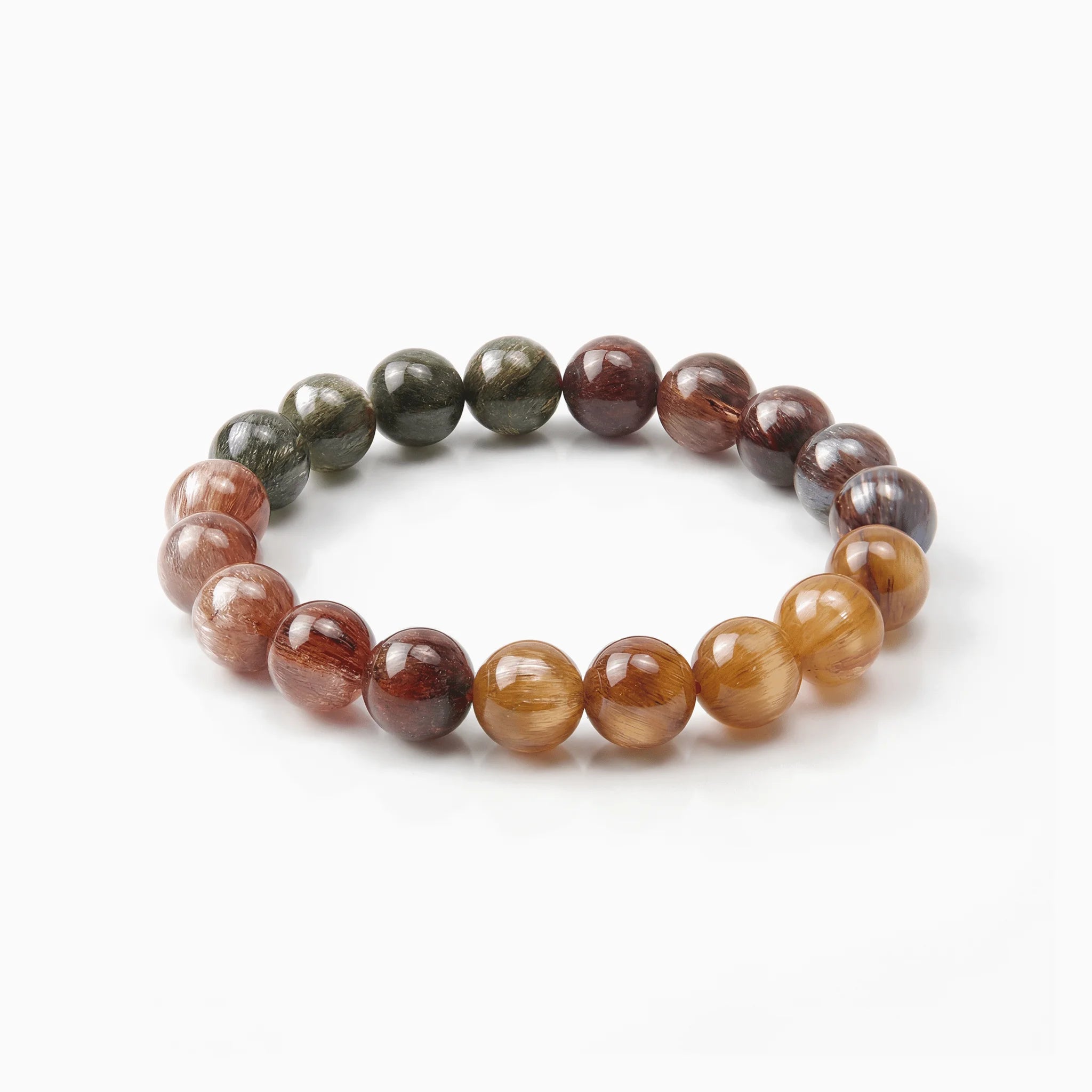
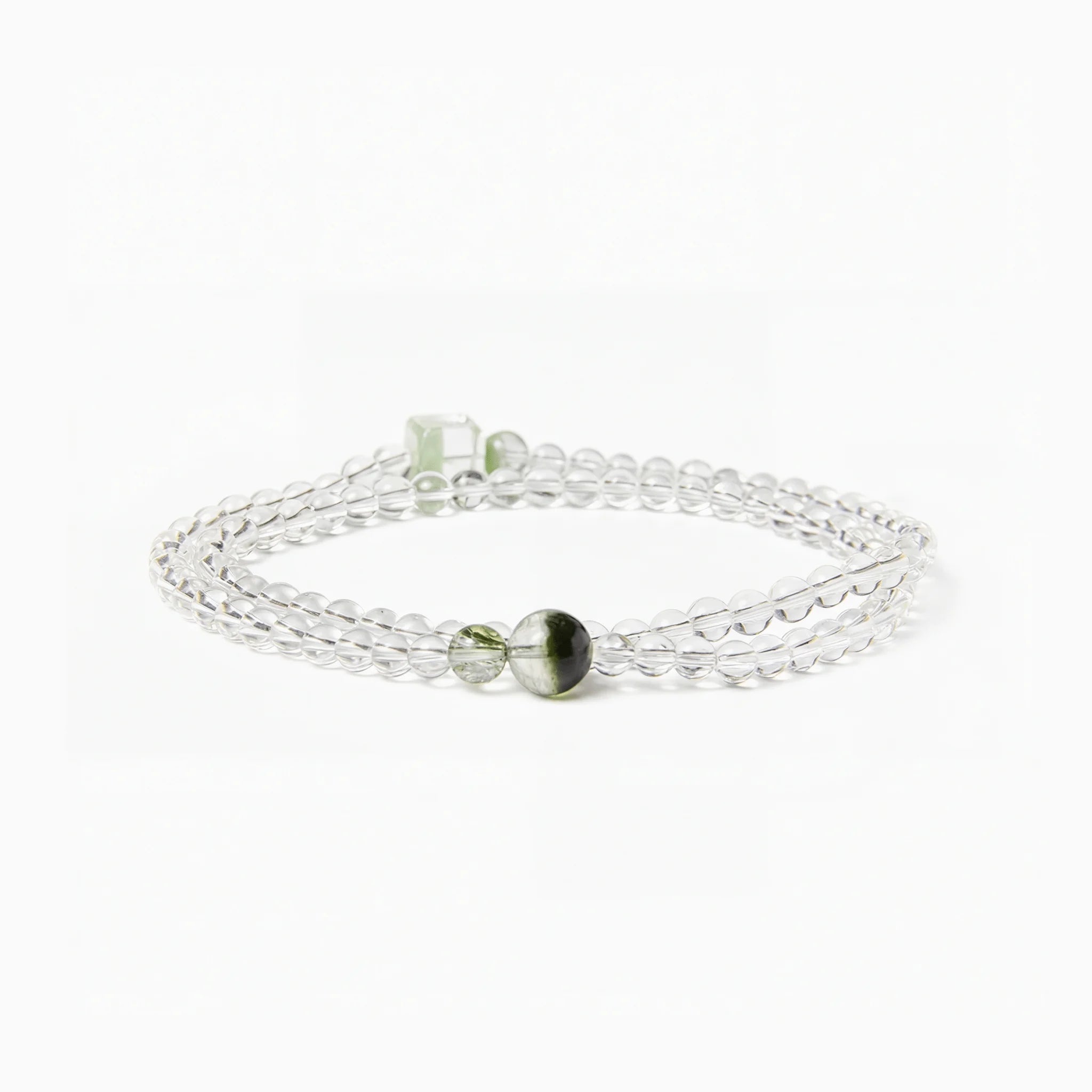
Some people incorporate their crystal jewelry — particularly bracelets — into grids. A bracelet placed at the centre of a grid, or worn during the period of a grid's activity, connects the intention of the grid to everyday wear. This is not a standard practice, but it is a thoughtful one: it extends the grid's function from a fixed spatial arrangement to something that moves with you through the day.
The most natural way to do this is to wear the bracelet daily during the period of the grid's activity, removing it at night to rest at the centre or edge of the arrangement. The consistency of wearing the same piece throughout the period creates a coherent experience.
Frequently Asked Questions
Do I need a special grid cloth or board?
No. Pre-printed grid cloths (with Flower of Life, Sacred Geometry, or other patterns) can be useful for keeping stones in position and creating visual structure, but they are not necessary. A plain linen cloth, a wooden tray, or a bare surface all work equally well. The geometry is in the arrangement of the stones, not in the surface beneath them.
How many stones do I need to make a grid?
A circle grid with a centre stone and 4-6 surrounding stones — 5-7 stones total — is a complete grid. You can use as few as three stones (a triangle) or as many as you wish. More stones do not create a more powerful grid; they create a more complex one. Start with fewer pieces and a clear arrangement before attempting larger patterns.
Can I use my BE. bracelet stones in a grid?
Yes. If you want to use tumbled stones or beads from your bracelet in a grid, the stones work the same way regardless of form. Some people disassemble a bracelet to use its stones in a grid, then reassemble. This is a personal choice — there is no right or wrong approach.
Should I leave my grid somewhere specific in my home?
Choose a location based on where you will naturally notice it. A grid in a rarely-visited room serves its function less well than one in a space you pass through daily. Bedroom windowsills, desk corners, and shelving in main living areas are all good choices. The location should be somewhere the grid can remain undisturbed and where you will return to it regularly without effort.
Does my grid need to face a particular direction?
Many feng shui and directional practices do assign significance to orientation. If you work within one of these traditions, follow its guidance. If you don't, choose an orientation based on aesthetics and practicality — a grid facing a window, for example, is often visually more striking because the stones catch the light.
Which BE. stones work best for a first grid?
A first grid works best when it uses stones you already know. If you have an amethyst bracelet, purchasing a small additional amethyst cluster for a centre stone creates an immediate and coherent starting point. Alternatively: choose the one BE. stone you are most drawn to, purchase two or three additional pieces of it (small tumbled stones are ideal for grid use), and create a single-stone arrangement. The simplicity of starting with one well-known stone is more valuable than the complexity of combining many unknown ones.
Explore BE.'s crystals for grid practice — single stones and sets available. 📎 [PLACEHOLDER – insert link to: /collections/all]
Partager:
Quatre chemins de formation géologique